< CONTINUUM />We regret to inform you that the conference has been postponed. Further details, including new dates, will be made available in due course. Thank you for your patience and continued support.
THREAT 2026: CONTINUUM is the fourth edition of the THREAT Conference Series. It convenes cybersecurity, logistics, policy, and research leaders to address a pressing challenge facing the global economy: the security and continuity of modern supply chains.
Conference Sponsors
Organisations collaborating in the development and delivery of THREAT 2026.




Academic Partners
Organisations supporting academic and research participation in THREAT 2026.




< conference_co_chairs />



< conference_editorial_board />
South Africa
South Africa
United States
South Africa
< conference_venue />

THREAT 2026: CONTINUUM is the fourth edition of the THREAT Conference Series. It convenes cybersecurity, logistics, policy, and research leaders to address a pressing challenge facing the global economy: the security and continuity of modern supply chains. From maritime logistics and air cargo security to digital infrastructure and cross-border data flows, modern supply chains are increasingly reliant on interconnected systems. THREAT 2026 explores the operational, strategic, and regulatory dimensions of supply chain security–including the vulnerabilities of critical infrastructure, the integrity of logistics networks, and the evolving nature of cyber-physical threats. The conference advocates a multi-sectoral approach that brings together industry, government, and academia. By fostering dialogue between cybersecurity professionals, logistics operators, policymakers, and researchers, THREAT 2026 aims to build resilience, strengthen coordination, and promote secure, uninterrupted global trade. THREAT 2026 will equip participants with the knowledge and tools to safeguard supply chain continuity, secure critical nodes, and prepare for the evolving threats that disrupt global commerce. THREAT 2026 thus becomes a pivotal event for reshaping the discourse on supply chain resilience in an increasingly interconnected world.
< supply_chain_tools />
As part of the THREAT 2026 theme of CONTINUUM: Securing Modern Supply Chains, we invite delegates, organisations, and researchers to explore and use the COBRA supply chain security assessment questionnaires — developed to help organisations identify vulnerabilities and measure maturity across their supply chain security posture.
A structured supply chain security questionnaire designed to help organisations assess and benchmark their cybersecurity posture across critical supply chain touchpoints — from logistics and procurement to digital infrastructure and third-party risk.
Launch COBRA-SCA tailored variant of the COBRA assessment framework designed specifically for metros and municipalities — helping local government entities evaluate their cybersecurity readiness and identify priority areas for improvement.
EnquireThese tools are provided as a resource for conference delegates and the broader cybersecurity community.
< call_for_papers />
CONTINUUM: Securing Modern Supply Chains. THREAT 2026 invites concise academic, practitioner, policy, and industry contributions on the cybersecurity challenges facing modern supply chains – from logistics platforms, ports, airports, warehouses, and customs systems to cloud services, identity platforms, and third-party providers.
Academic rigour is welcome. Practitioner insight is essential. Evidence-based contribution is expected.
Peer-reviewed research using the IEEE conference format. Considered for inclusion in the official THREAT 2026 Conference Proceedings (ISBN).
Clear, evidence-informed, reflective contributions from practitioners. Vendor marketing submissions will not be accepted.
Visual contributions presented during the dedicated poster session on Day 3 of the conference.
THREAT does not use standard conference presentation formats. Accepted papers will be grouped into thematic roundtables. Each author will have four minutes to communicate the most important contribution of their paper, followed by facilitated discussion with the panel and audience.
Authors of accepted papers will also be required to provide a tight one-page summary of their paper.
Accepted Research Papers and Professional Insight Papers will be considered for inclusion in the official THREAT 2026 Conference Proceedings, which will carry an ISBN.
Authors should receive an acknowledgement after successful submission. For submission enquiries, contact info@threatcon.co.za.
< conference_agenda />
The three-day programme framework is now available. Speakers, session participants, rooms and detailed timings remain subject to confirmation.
Last updated: 22 June 2026
View the Programme OutlineClosed-Door Session (By Invitation Only)
For senior government officials, industry executives, logistics operators, and policymakers
Securing the Lifelines of Global Commerce: A Multi-Sectoral Imperative
High-level discussion on economic security, geopolitical risks, and the criticality of supply chain resilience
Cyber-physical threats to ports, logistics hubs, and transport networks
Briefings on current threat actors, attack vectors, and operational disruptions
National and regional critical infrastructure protection policies
Public-private partnership models, regulatory harmonization, and cross-border coordination
Building resilience: investment priorities, capacity building, and technology adoption
Roundtable on joint action, information sharing, and future commitments
Open to All Registered Participants
The Security and Continuity of Modern Supply Chains: From Risk to Resilience
OT/IoT vulnerabilities, maritime and aviation logistics security, integration of IT and OT frameworks
Cloud platforms, APIs, customs systems, data integrity, regulatory compliance (GDPR, POPIA)
AI/ML for security, blockchain for traceability, quantum computing, digital twins, 5G and edge computing
Hosted by FIRST (Forum of Incident Response and Security Teams)
THREAT 2026 is grateful to FIRST for kindly supporting the conference by hosting a dedicated full-day technical session on incident response. Drawing on FIRST's global network of incident response and security teams, the session will give delegates practical, hands-on exposure to modern incident response practices, coordination models, and collaborative techniques – directly relevant to securing today's interconnected supply chains.
Full-Day Technical Session • Hosted and Facilitated by FIRST
Incident response fundamentals, coordination models, and lessons from global FIRST teams
Practical, hands-on incident response exercises facilitated by FIRST
Collaborative incident response scenarios and cross-sector coordination, with open discussion
A detailed technical agenda for the FIRST session will be published by FIRST closer to the conference date.
Accepted papers will be presented via round-table discussions and dedicated presentation sessions on Day 2. Day 3 is dedicated in full to the FIRST technical session, hosted by FIRST.
< conference_speakers />
Additional confirmed speakers will be announced as the programme is finalised.
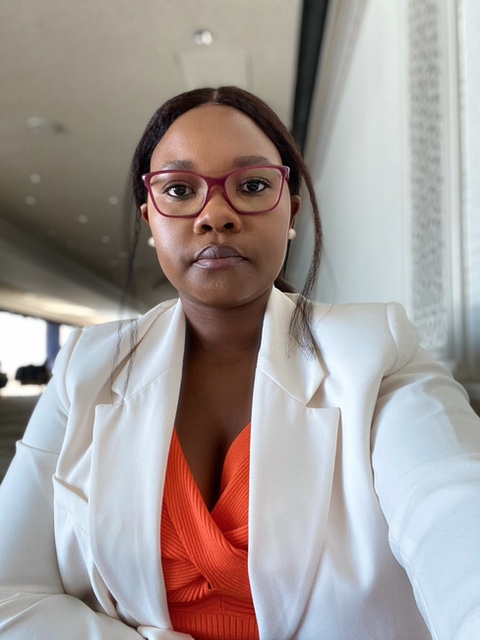
Moliehi Makumane
Researcher & Global Cyber Diplomacy Advisor, Security and Technology Programme, UNIDIR • Pretoria, South Africa
Moliehi Makumane advises African governments, regional bodies, and multilateral forums on cyber norms, responsible state behaviour, and emerging technology governance. Based in Pretoria, she leads UNIDIR's engagement across the continent — from UN-level negotiations to national implementation.
She contributed to the UN Group of Governmental Experts (UNGGE) on responsible state behaviour in cyberspace and co-authored the Handbook on the Practice of Cyber Diplomacy. She designs simulation exercises and tabletop scenarios for government officials across Africa, turning complex international frameworks into practical response tools.
Focus Areas
Featured on EU Cyber Direct, Chatham House's Between the Binary podcast, and Securing Our Digital Future (Foreign Policy Analytica).
Dr. Dusty-Lee Donnelly
Senior Lecturer & Director, Maritime Law and Maritime Studies Unit • University of KwaZulu-Natal (UKZN)
Dr. Dusty-Lee Donnelly is an admitted advocate of the High Court of South Africa. She joined the School of Law after practising first as an attorney and then as a member of the KwaZulu-Natal Society of Advocates in civil litigation and maritime law.
She is Director of the Unit of Maritime Law & Maritime Studies and programme coordinator of the LLM Maritime Law programme. She has supervised several Master's and Doctoral students in maritime and business law, and lectures in admiralty jurisdiction and civil procedure.
In 2021 she completed her PhD entitled Privacy by (re)Design: A Comparative Study of the Protection of Personal Information in the Mobile Applications Ecosystem under United States, European Union and South African Law. She was co-investigator on the US National Institutes of Health funded project Data Science for Innovation and Discovery Africa–Law (DSI-Law), working in the Artificial Intelligence working group.
She is a member of the Comité Maritime International Cybersecurity expert working group. Her current research focuses on the integration and regulation of AI and 4IR technologies in the shipping industry.
Focus Areas

Muhammad Ali
Managing Director • WWise
Muhammad Ali is the Managing Director of WWise, bringing extensive expertise in cybersecurity strategy and technology leadership. He has been a prominent voice in the South African cybersecurity landscape, helping organisations navigate complex security challenges and build resilient digital environments.

Given Shingange
Aviation Security Risk and Cybersecurity Specialist • South African Civil Aviation Authority (SACAA)
Given Shingange is an Aviation Security Risk and Cybersecurity Specialist with the South African Civil Aviation Authority (SACAA). In this role, he leads efforts to strengthen aviation security through risk-based oversight and the integration of cybersecurity into regulatory frameworks.
He previously served in various national security government departments and has been a member of South Africa's Justice, Crime Prevention and Security (JCPS) Cluster Cyber Response Committee (CRC), where he contributed to national-level cybersecurity policy and response.
With a background spanning aviation, national security, and cybersecurity policy, Shingange brings a unique perspective on the intersection of technology, risk management, and regulatory oversight in safeguarding critical sectors.
Focus Areas

Prof. Thomas Konrad
Academic Leader of Physics (Westville) • University of KwaZulu-Natal (UKZN)
Prof. Konrad studied Physics and Philosophy in Tübingen, London, Rome and Konstanz. He is the Academic Leader of the physics cluster in Durban and pioneers research in quantum monitoring as well as quantum information processing and communication with bright states of light.
He promotes the interplay between science and the arts — curating exhibitions on Reflections on Light and Science meets Arts — and brings science into the public realm through newspaper articles and radio interviews.
Research Interests
Qualifications
< conference_fees />
All fees are in South African Rand (ZAR).
Fees and Day 1 Access
Registration fees include access to the open conference programme on 29–30 October 2026, together with applicable meals, refreshments and conference materials. The Executive Briefing on 28 October is a closed session requiring a separate invitation.
All fees are stated in South African Rand. Academic-rate eligibility may require institutional verification. Cancellation, substitution, refund and payment terms are available here: Registration Terms.
Registration options will be available soon. Please check back shortly.
< conference_contact />